




The Nita M. Lowey 21st Century Community Learning Centers program (21st CCLC, Title IV, Part B) funds afterschool, before-school and summer programs that give students academic enrichment, including STEM and computer science. Each state runs its own competition, and grants are at least $50,000 a year for three to five years.
What 21st CCLC pays for
- Academic enrichment outside the school day, including programs that build skills in science, technology, engineering and math, with computer science named in federal guidance.
- Tutoring, literacy, arts, health and career readiness activities.
- Family engagement and literacy services.
How the competition works
- Your state education agency sets the timeline, the application and the scoring, and may label each round as a cohort.
- Programs must primarily serve students who attend schools eligible for Title I schoolwide programs (generally 40% or more low-income) and their families.
- States give priority to programs that serve schools needing support and to joint applications from a Title I district and another organization, such as a nonprofit or library.
- Funds supplement, not supplant, other program funding.
Funding outlook
Congress kept 21st CCLC as a separate program in fiscal 2026, which pays for the 2026-27 school year. Since October 1, 2026, federal programs have run on a continuing resolution at fiscal 2026 levels through December 11, 2026. The administration's fiscal 2027 budget request would end 21st CCLC as a separate program and fold it into a new state block grant; Congress hasn't decided. Check your state's site for its next competition.
An afterschool STEM program that fits
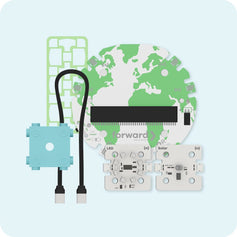
The Coding for Good Kit works well in clubs and camps: kits store in cases between sessions, students work in pairs, and every project ends with something students built and coded themselves.
- A class set: 15 Coding for Good Kits with micro:bit V2 Go Packs come to $4,454.85 before shipping, enough for 30 students working in pairs. Kits go back in their cases after class, so one set serves every section.
- Data-driven Smart Farming (grades 6-8): students build a system that waters a plant based on soil moisture and tracks how long the pump runs.
- Wildfire Detection with Autonomous Vehicles (grades 6-8): students build a vehicle that patrols an area and raises an alert when it detects bright light and loud sound.
- MicroChat adds AI literacy: the AI writes the first version of the code, then guides students through Predict, Run, Investigate, Modify and Make, so students plan, explain and test.
- Teacher training: free self-paced courses come with the kits, and live virtual PD starts at $1,000 for a 90-minute session.
Frequently asked questions
How much do 21st CCLC grants award?
At least $50,000 a year per grant, for three to five years. States set the maximum.
When is the deadline?
Each state sets its own schedule. Some compete every year and others only when current grants end, so watch your state education agency's 21st CCLC page.
Can a nonprofit apply?
Yes. Community organizations, tribes, charter schools and other public or private groups can apply, alone or with a district.
Can 21st CCLC pay for STEM kits?
Supplies that are reasonable and necessary for your program's activities are generally allowable. Follow your state's budget rules.
How can Forward Education help?
We can map our lessons to your state standards, write an official quote, show how a purchase fits the program's allowable uses, and provide a letter of support. Contact our grant team.
Sources: Every Student Succeeds Act, Title IV, Part B; U.S. Department of Education 21st CCLC non-regulatory guidance; fiscal 2027 continuing resolution (P.L. 119-103); U.S. Department of Education fiscal 2027 budget request. Checked November 1, 2026.


