




NOAA's Bay-Watershed Education and Training program, B-WET, funds place-based environmental education for K-12 students and professional development for their teachers. Every project is built around a Meaningful Watershed Educational Experience: students investigate a local environmental issue and take informed action. B-WET is regional, so it only funds work in the areas below, and no competitions were open when we checked on November 1, 2026.
Is your state in a B-WET region?
| B-WET region | Where it funds |
|---|---|
| California | 29 California counties |
| Chesapeake Bay | Maryland, Washington, D.C., and parts of Delaware, New York, Pennsylvania, Virginia and West Virginia |
| Delaware Bay (exploratory, 2026-2027) | Parts of Delaware, New Jersey, New York and Pennsylvania |
| Great Lakes | Illinois, Indiana, Michigan, Minnesota, New York, Ohio, Pennsylvania and Wisconsin |
| Gulf of America | Alabama, Florida, Louisiana, Mississippi and Texas |
| Hawaiʻi | Hawaiʻi |
| New England | Connecticut, Maine, Massachusetts, New Hampshire, Rhode Island and Vermont |
| Pacific Northwest | Oregon and Washington |
If your state isn't in the table, for example Arizona, Colorado, Georgia, North Carolina or Utah, B-WET doesn't fund projects there. See funding options by state instead.
What B-WET looks for
A Meaningful Watershed Educational Experience is learner-centered. Students define a local environmental issue, investigate it with real observations and data, and use what they learn to take action. B-WET also funds professional development that helps teachers lead these experiences.
Timeline
Each region runs its own competition on its own schedule. NOAA's B-WET apply page listed no open competitions on November 1, 2026. Chesapeake B-WET is running an exploratory Delaware Bay program in fiscal years 2026 and 2027. Check the B-WET apply page or contact your regional coordinator before you plan a proposal.
Projects that fit
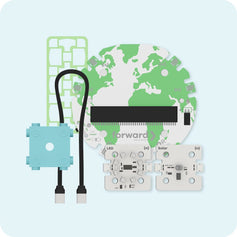
Students can't investigate an issue without data. The Coding for Good Kit lets students in grades 3-12 build their own monitoring and response systems with 11 plug-and-play sensors and modules, 4 servos and a water pump, then use the data to make a case for action.
- Data-driven Smart Farming (grades 6-8): students build a system that waters a plant based on soil moisture and tracks how long the pump runs, a starting point for conversations about water use in your watershed.
- Teacher training: free self-paced courses, plus live virtual PD from $1,000, to help teachers run hands-on investigations with confidence.
Frequently asked questions
Is B-WET available in every state?
No. B-WET funds projects only in its regions: California, Chesapeake Bay, Delaware Bay, the Great Lakes, the Gulf of America, Hawaiʻi, New England and the Pacific Northwest.
Is a B-WET competition open now?
Not as of November 1, 2026. Regions post their own funding opportunities when they compete.
What does B-WET fund?
Meaningful Watershed Educational Experiences for K-12 students and related professional development for teachers.
How can Forward Education help?
We can build a project plan from our lessons, align it to your state's standards, write an official quote for your budget and provide a letter of support. Contact our grant team.
Source: NOAA Office of Education, B-WET program and apply pages, checked November 1, 2026.


