




IDEA Part B sends federal formula funds through each state to school districts to pay for special education and related services for students with disabilities. It isn't a grant you apply for, and spending follows students' IEPs and the district's special education plan. Two parts of IDEA matter most for hands-on STEM: assistive technology in a student's IEP, and coordinated early intervening services.
Where IDEA can fit a STEM program
- IEP-driven: when an IEP team decides a device or service helps a student meet IEP goals, IDEA can pay for it as assistive technology or specially designed instruction.
- Coordinated early intervening services (CEIS): districts can use up to 15% of their IDEA Part B funds for K-12 students who aren't identified for special education but need extra academic or behavioral support.
- Incidental benefit: special education spending can benefit other students too, as long as it's for students with disabilities first.
IDEA funds must supplement, not supplant, state and local special education spending.
How to raise it
Start with the IEP team or your district's special education director. Explain the student goals a hands-on program would support, such as engagement, problem solving, fine motor skills or communication, and how you'll track progress.
Funding outlook
IDEA funds for the 2026-27 school year come from fiscal 2026 appropriations. Since October 1, 2026, federal programs have run on a continuing resolution at fiscal 2026 levels through December 11, 2026. The administration's fiscal 2027 budget request would raise IDEA Grants to States to about $15.4 billion.
Hands-on learning that welcomes every student
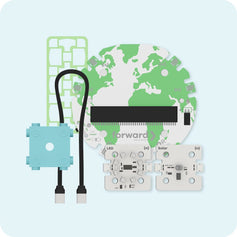
The Coding for Good Kit uses plug-and-play sensors and modules, so there's no soldering or breadboard wiring, and students code in Microsoft MakeCode with colorful drag-and-drop blocks. Lessons build step by step with Use, Modify and Create paths, so students can start where they are.
- Data-driven Smart Farming (grades 6-8): students build a system that waters a plant based on soil moisture and tracks how long the pump runs.
- Wildfire Detection with Autonomous Vehicles (grades 6-8): students build a vehicle that patrols an area and raises an alert when it detects bright light and loud sound.
- Teacher training: free self-paced courses come with the kits, and live virtual PD starts at $1,000 for a 90-minute session.
Frequently asked questions
Can IDEA pay for coding kits?
Only when they serve students with disabilities, for example as assistive technology or instruction in an IEP, or as part of a district's coordinated early intervening services. Your special education director decides.
What are coordinated early intervening services?
A district can use up to 15% of its IDEA Part B funds for K-12 students who aren't identified for special education but need extra academic or behavioral support.
Is there an application?
No. IDEA Part B is a formula grant. Spending is decided through IEPs and the district's special education plan.
How can Forward Education help?
We can map our lessons to your state standards, write an official quote, show how a purchase fits the program's allowable uses, and provide a letter of support. Contact our grant team.
Sources: Individuals with Disabilities Education Act, Part B, and its regulations (34 CFR Part 300); fiscal 2027 continuing resolution (P.L. 119-103); U.S. Department of Education fiscal 2027 budget request. Checked November 1, 2026.


